Rules for posted workers
Are you a driver who drives through Europe? Then it’s highly likely the rules for posted workers apply to you. This means you’re entitled to a higher wage! In the video below we explain everything you need to know about these rules.
Ниже Вы можете ознакомиться с видео на русском языке:
Choose language:




Know your rights
Are you an EU truck driver working in another Member State?
Then you are entitled to the pay and working conditions of the country where you load and or unload.
This page explains when you are considered a posted worker, what rights you have, and what you can do if those rights are not respected, or if you are not getting propper payment.
Your rights as an EU truck driver
As part of the EU Mobility Package, you have the right to equal pay and equal working conditions in the country where you work. This includes:
- maximum working hours and minimum rest periods
- minimum paid annual leave
- minimum wages, including overtime pay
- health, safety and hygiene at work
- protective measures for drivers who are are pregnant (or who have recently given birth) and drivers younger than 18
- equal treatment of all genders and protection against discrimination
For wages, the starting point is always the collective labour agreement that applies in the country where you work and that has been declared generally binding.
If no such agreement exists, the legal minimum wage applies.
An example:
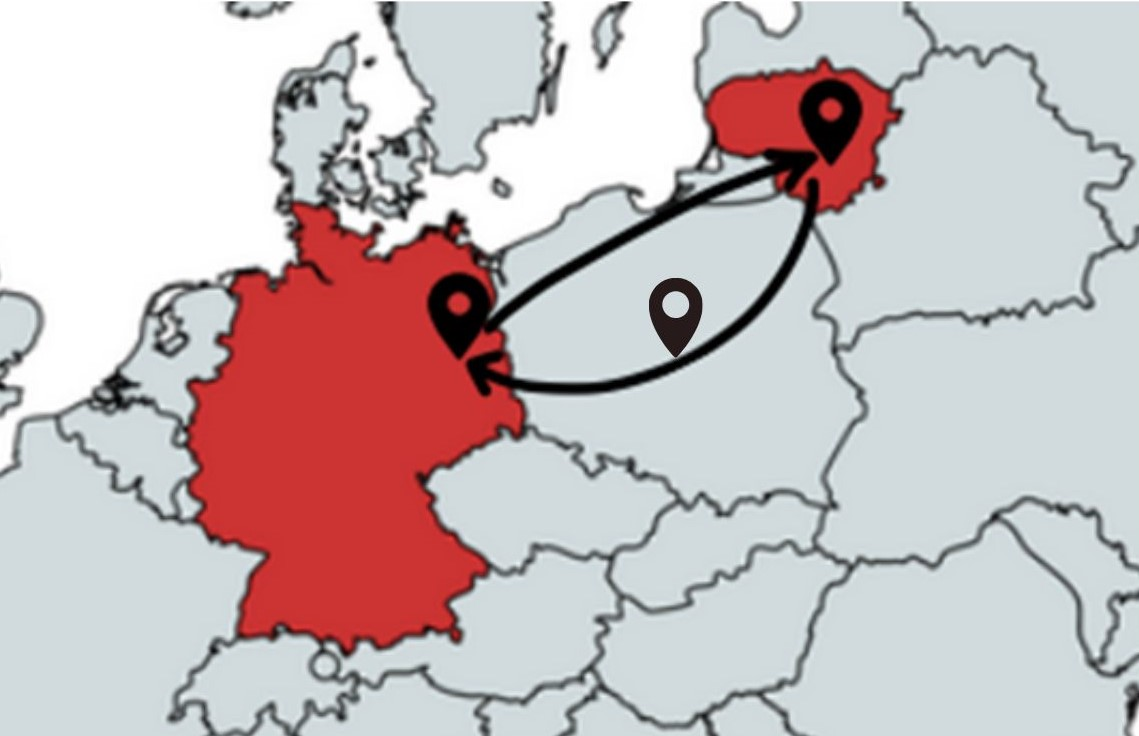
A Lithuanian driver working for a Lithuanian transport company loads in Germany and unloads in the Netherlands.
The driver is entitled to the German collective labour agreement (or the German minimum wage), when they drive in Germany.
When driving in the Netherlands, the driver is entitled to either the Dutch minimum wage or the Dutch collective labour agreement wage.
Am I a posted worker in road transport?
You are considered a posted worker when your work has a close connection to the host country. According to EU rules, this applies in the following situations:
You are a posted worker if you are working:
- cross-trade operations: between two Member States or between a Member State and a non-EU country, when neither is the country where the transport company is established.
- cabotage operations: temporary domestic transport in a Member State that is not the home country of the transport company.
You’re not a posted worker when performing the following operations:
- international bilateral transport operations: an opep based on a transport contract that starts in the country where the transport company is established and goes to another EU Member State or a non-EU country, or the other way around, returning to the country of establishment.
For example: Company based in Lithuania, driver drives to Germany to load and comes straight back to Lithuania to unload.
- limited additional activities of loading and/or unloading: cross-trade activities carried out during a transport journey that goes directly between the country where the transport company is established and another country, where the driver loads or unloads once in a country they pass through, as long as the goods are not both loaded and unloaded in the same Member State.
For example: Company is based in Lithuania, driver drives to Germany to load, on the way back partially unloads in Poland and unloads the rest in Lithuania. - transit through a Member State without carrying out any activity of loading or unloading.
For example: Company based in Lithuania, driver loads in Poland, drives through Germany to unload in the Netherlands. Polish wage applies for the time in Poland, Lithuanian wage for the transit time in Germany and Dutch wage applies for the time in the Netherlands. - initial or final stage of a combined transport operation: when this part of the journey consists of a direct international transport betweenWhat to do if you are a posted worker and are not paid correctly the country where the transport company is established and another country.
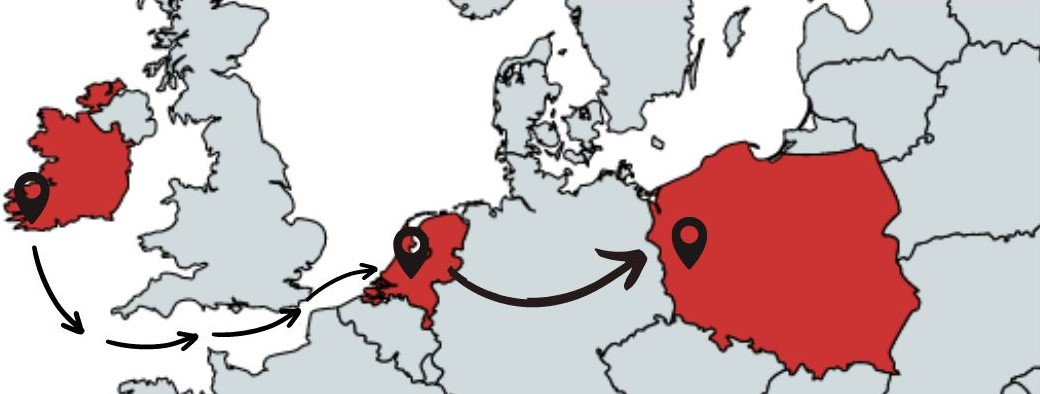
For example: Containership departs from Ireland to the Port of Rotterdam. There a container is loaded onto a truck which will unload in Poland.


What to do if you are a posted worker and are not paid correctly
If you suspect that you are not paid according to the rules:
- Register every border crossing in your tachograph by entering the correct country code
- Keep clear records of your working hours, rest times and breaks
- Save an overview of your trips, countries and working shifts
These records make it possible to claim the wages you are entitled to.
Need help or more information?
If you have questions about your rights or want your wage checked, contact your union.
Not a union member or not sure where to go?
You can contact VNB directly mail to transport@fnv.nl or whatsapp.
Who are we?
VNB is a Collective Labour Agreement watchdog. We help employees in transport and logistics check whether they are being paid correctly. If not, we help them get justice. More info on our website.
Mobility Package
The EU rules on posting workers in road transport are part of the Mobility Package (for more info, click here). They are aimed at ensuring fair competition in the EU transport market and fair working conditions for posted workers. In other words, their objective is to make sure that workers aren’t unfairly disadvantaged by the posting and to prevent social dumping. Social dumping refers to the practice of companies exploiting differences in labour laws and wage levels between countries in order to reduce their labour costs and increase their profits.
Choose language:
Self-employed drivers
As a self-employed driver (zzp) in the Netherlands, you must comply with a number of rules, even if you are not a Dutch citizen. You must be registered with the Chamber of Commerce (KVK), have a valid driver’s licence (including Code 95), and be insured.
Permits
For professional road transport, you usually need your own NIWO Euro licence. This licence must be in your name. You are not allowed to operate under someone else’s licence. To obtain this licence, you must demonstrate sufficient financial standing. In some cases, no licence is required for light commercial vehicles, but this is a rarity. Driving without your own NIWO licence when one is required can result in a fine of €4.300.
Insurance
The following insurances are required for self-employed drivers working in the Netherlands:
1. Liability insurance (AVB) Covers damage you cause to others during your work.
2. Commercial vehicle insurance Mandatory for your vehicle. In transport, comprehensive (all-risk) coverage is common.
3. Goods in transit insurance Covers damage to the cargo you transport. Not legally required, but often required in practice.
In addition, there is disability insurance (AOV). This is not mandatory, but strongly recommended. Without it, you will have no income if you are unable to work due to illness.
False self-employment
You must genuinely work as a self-employed contractor. This means no disguised employment, setting your own working hours, and having multiple clients. Make sure this is clearly documented in your contracts so you can prove your independent status.
Pension
As a self-employed person, you do not build up a pension through an employer. You must arrange this yourself, for example by saving or through a pension scheme.
Your risks:
- Fine for driving without your own NIWO licence: €4,300
- Not being paid or not being paid correctly for your work
- Higher risk of unpaid invoices compared to employment